


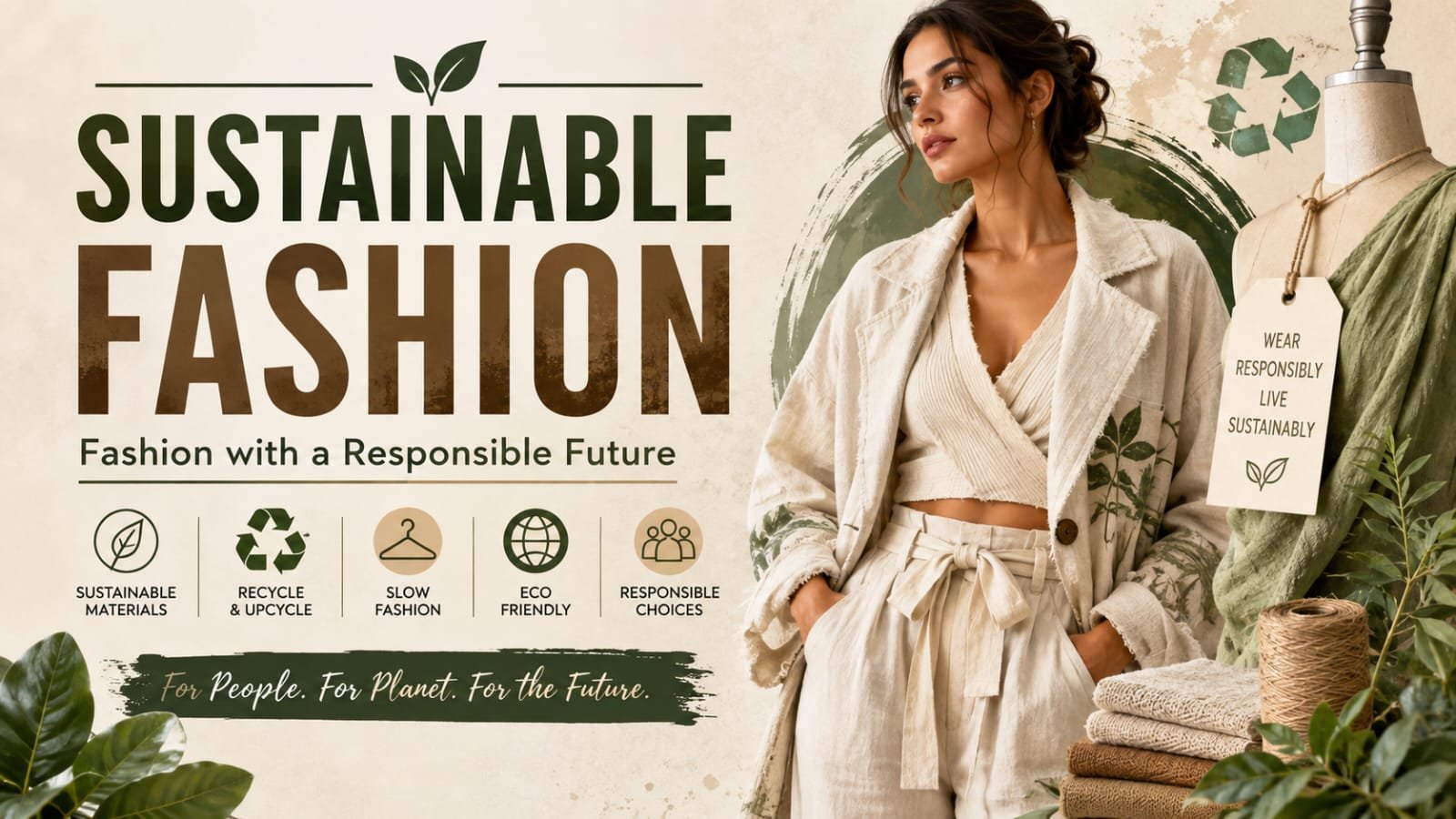
Sustainable Fashion
SUSTAINABLE FASHION
Fashion with a Responsible Future
Fashion is one of the most creative forms of self-expression. It reflects our personality, culture, lifestyle, and changing society. However, the rapid growth of the fashion industry has also created environmental and social challenges. This has increased the importance of sustainable fashion, which focuses on creating and consuming fashion in a more responsible way.
What is Sustainable Fashion?
Sustainable fashion is an approach to designing, producing, using, and disposing of clothing while considering its environmental and social impact. It aims to reduce waste, pollution, excessive water consumption, and the unnecessary use of natural resources.
Instead of focusing only on producing more clothes, sustainable fashion encourages designers and consumers to think about the complete life cycle of a garment—from the selection of raw materials to its production, use, reuse, and disposal.
Sustainable Materials
The choice of fabric plays an important role in sustainable fashion. Designers are increasingly exploring materials such as organic cotton, linen, hemp, recycled fibres, and other innovative alternatives.
Natural and recycled materials can help reduce dependence on limited resources. Designers are also experimenting with innovative fabrics made from agricultural waste and other recycled materials.
Upcycling and Recycling
Upcycling is an important concept in sustainable fashion. It involves transforming old, unused, or damaged garments into new and useful fashion products.
For example, an old denim jacket can be redesigned with fabric patches, embroidery, or different panels to create a completely new garment. This reduces textile waste while also encouraging creativity.
Recycling, on the other hand, involves processing used materials so they can be used again to create new products.
Slow Fashion
Sustainable fashion is closely connected with the concept of slow fashion. Slow fashion encourages consumers to purchase fewer but better-quality garments and use them for a longer period.
Instead of buying clothes simply because they are trending, consumers can choose timeless designs, durable fabrics, and versatile garments that can be styled in different ways.
Role of Fashion Designers
Fashion designers have an important responsibility in creating a sustainable future. They can make conscious decisions about fabrics, production techniques, packaging, garment construction, and waste management.
Designers can also create collections using zero-waste pattern cutting, fabric scraps, upcycling, and modular designs.
Role of Consumers
Sustainability is not only the responsibility of designers and brands. Consumers also have an important role to play.
Simple practices such as repairing clothes, reusing garments, donating unwanted clothing, buying second-hand pieces, and avoiding unnecessary purchases can contribute to a more sustainable fashion culture.
The Future of Sustainable Fashion
The future of fashion is likely to combine creativity, technology, and environmental responsibility. Designers are exploring innovative materials, digital design techniques, circular fashion systems, and new production methods.
Sustainable fashion is therefore not simply a trend. It represents a change in the way the fashion industry thinks about design, production, consumption, and waste.
Conclusion
Sustainable fashion proves that style and responsibility can exist together. Fashion designers can create beautiful and innovative garments while also considering their impact on people and the planet. By making conscious choices, both the industry and consumers can contribute to a more responsible future for fashion.